

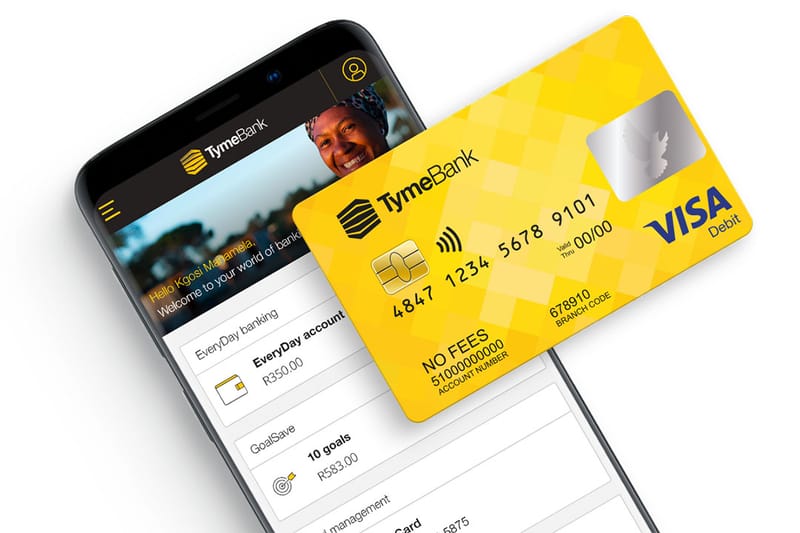
With the official approval of a historic joint venture between Tyme Bank and Sanlam by South Africa's Competition Tribunal in early August 2025, a new fintech force plans to transform the retail credit landscape. One of South Africa's most reputable financial institutions, Sanlam, and one of its fastest-growing digital banks, Tyme Bank, are joining forces in this arrangement.
This combination may seem new, but Africa has witnessed a similar situation before, with radical outcomes. A virtual banking platform called KCB M-PESA was introduced in 2015 by Kenya Commercial Bank (KCB) and Safaricom's M-PESA. This platform enabled millions of unbanked Kenyans to access savings and microloans via their mobile devices.
Could South Africa be on the cusp of a similar fintech revolution? Let’s walk through what’s happening, what it means, and what history tells us.
Sanlam-Tyme JVCo
A 50:50 joint venture deal between Tyme Bank and Sanlam will combine Tyme Bank's online banking infrastructure with Sanlam's personal lending operations, which includes a R5 billion loan book. As a result, Sanlam-Tyme JVCo has been established
The importance of this acquisition is attributed to Tyme Bank's rapidly growing customer base which currently stands at more than 11 million accounts. Additionally, Tyme Bank's digital infrastructure, and impressive retail distribution approach via stores, kiosks, and applications provides any partner with a turn-key digital transformation capacity. Sanlam on the other hand offers its credit life insurance products, underwriting expertise, and legacy insurance ecosystem networks.
The objective of this strategic alignment is to provide easily accessible personal loans, integrated insurance, and eventually additional financial products to South Africa's underbanked population.
KCB x M-PESA: A Blueprint for Inclusive Digital Finance
To understand the strategic potential of the Tyme Bank–Sanlam partnership, it helps to examine one of Africa’s most successful financial collaborations, the 2015 alliance between KCB and M‑PESA. This joint initiative wasn’t just a product partnership, it was a transformative leap that brought banking services to millions through mobile phones, fundamentally reshaping Kenya’s financial ecosystem.
At its core, the KCB–M‑PESA partnership was born from the recognition that each party held a key that the other lacked. KCB, one of East Africa’s largest and most established banks, had regulatory expertise, institutional trust, and experience in credit underwriting. Meanwhile, M‑PESA, Safaricom’s ubiquitous mobile money platform, had already become the financial lifeline of the Kenyan people. With over 70% of the population using M‑PESA by the mid-2010s, the platform offered a daily touchpoint with millions, especially in rural and underserved areas.
The strategic collaboration was brilliantly simple. KCB would provide the back-end banking infrastructure and credit services, while M‑PESA would act as the front-end distribution channel. Customers could access the new KCB M‑PESA product entirely through their phones, opening virtual savings accounts, applying for micro-loans, and receiving funds instantly, all without setting foot in a bank branch. Loans could be as small as KSh 50, making them accessible even to low-income users, while savings accounts offered competitive interest and frictionless access. What made the partnership so powerful was how it responded to Kenya’s financial reality. Traditional banking infrastructure was limited, especially in rural areas. At the same time, mobile phone penetration was soaring, with over 85% of Kenyans owning a handset. Financial exclusion was widespread, but mobile access wasn’t, and the partnership effectively bridged that divide.
Launched in 2015, KCB M‑PESA experienced explosive growth. Within a year, millions had signed up, and by 2020, the service had over 14 million users. Between 2015 and 2020, KCB M‑PESA disbursed over KSh 116 billion in micro-loans, generating more than KSh 1.2 billion in revenue at its peak. These numbers weren’t just financial milestones, they were social ones, signaling a mass migration into formal financial services. Yet, as with any innovation, the model eventually faced headwinds. By 2023, loan disbursements had declined to KSh 42.2 billion, revenue had halved, and average loan sizes dropped. Much of this decline was due to fierce competition, particularly from Fuliza, a real-time overdraft service offered by M‑PESA and its other banking partner, NCBA Bank. The market had matured, and consumer behaviour evolved.
Despite these pressures, the legacy of KCB M‑PESA remains profound. It catalyzed a shift in how banks thought about distribution, risk, and customer engagement. It proved that financial inclusion and profitability could coexist, and that digital partnerships could deliver both scale and impact when designed thoughtfully. In many ways, the KCB–M‑PESA partnership laid down a blueprint for other African markets. It demonstrated how complementary strengths, such as technology and trust, access and regulation, could be merged to create something greater than the sum of its parts. For South Africa, and for the Tyme Bank–Sanlam joint venture, this story is more than just a case study, it’s a lesson in what’s possible when the right players, in the right moment, come together with a shared purpose.
Lessons in Digital Finance: What Tyme Bank and Sanlam Can Learn from KCB–M-PESA
One of the most compelling lessons from the KCB–M‑PESA model is the power of complementary strengths. In Kenya, KCB brought with it the credibility, compliance capabilities, and deep credit expertise of a legacy banking institution. M‑PESA, meanwhile, was already embedded in the daily lives of millions. Their collaboration was not an attempt to reinvent financial services from scratch, it was a carefully engineered effort to meet consumers where they already were, and to use each partner’s strengths to cover the other’s blind spots.
The Tyme–Sanlam partnership mirrors this alignment in many ways. Tyme Bank has built a reputation as a nimble, digitally native bank with wide reach through its innovative kiosk model and app-based interface. Sanlam, with its robust history in credit, insurance, and financial planning, brings product depth and institutional weight. If these strengths are fused effectively, the joint venture has the potential to deliver real value to customers who are still underserved by South Africa’s financial sector.
Another key takeaway from the Kenyan experience is that scale in distribution is a non-negotiable factor in reaching the underbanked. KCB–M‑PESA succeeded because it piggybacked on a platform that already enjoyed ubiquitous penetration. M‑PESA wasn’t asking consumers to adopt a new tool, it was extending what they already used. Tyme Bank’s kiosk strategy and retail partnerships serve a similar purpose in South Africa, placing banking access in everyday environments such as grocery stores, which improves uptake and convenience. If the new Sanlam–Tyme venture can tightly integrate lending products into this footprint, the growth potential is significant.
That said, growth alone is not a guarantee of sustainability. KCB–M‑PESA’s early years were marked by massive uptake and loan volume, but by 2023, both revenue and average loan sizes had begun to shrink. Why? The market matured, competition intensified, and alternative products, especially Fuliza, captured consumer attention. The lesson here is that profitability and retention in digital lending depend on evolving product strategies, not just distribution. The Tyme–Sanlam JV must anticipate this curve, innovating not only at launch but continually thereafter, especially as new challengers emerge.
One area where Tyme and Sanlam may have an early advantage is in their decision to embed insurance into the lending process. Credit-life insurance not only protects the lender’s downside but also provides a real, tangible benefit to the consumer, especially in uncertain economic times. This dual value proposition could serve as a differentiator, particularly if it’s framed and communicated in a way that builds trust and transparency with borrowers.