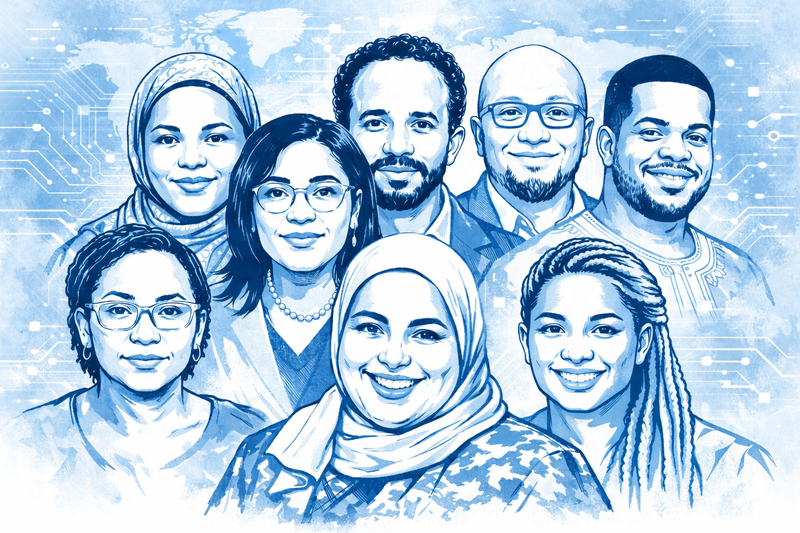
When the United Nations convened its Independent International Scientific Panel on Artificial Intelligence, a body designed to help the world make sense of a technology moving faster than politics can follow, something unusual happened. Eight Africans took their place among the forty experts tasked with guiding humanity’s response to AI.
It would be easy to frame this as representation as another milestone, another statistic to celebrate. But the deeper story lies elsewhere. This is not simply Africa being invited into the room. It is Africa reshaping the conversation itself.
A Different Kind of Arrival
For several decades, the story of artificial intelligence has been told from the perspective of a geography of power, including Asian industrial giants, European regulators, and American research labs. In that story, Africa appears as a latecomer to technology, a market to be entered rather than a source of knowledge.
Yet beneath that perception, a quieter ecosystem has been growing. Research communities like Masakhane and gatherings such as Deep Learning Indaba have cultivated a generation of African scientists who think about AI through a different lens, one shaped by linguistic diversity, social inequality, and the urgency of development.
The United Nations panel appears to acknowledge that change. Similar to an IPCC for artificial intelligence, it was established under Resolution A/RES/79/325 to offer impartial scientific insight into AI risks and prospects. It is a global knowledge engine designed to connect research and policymakers.
Africa is no longer on the periphery of that engine.
The Many Faces of African AI
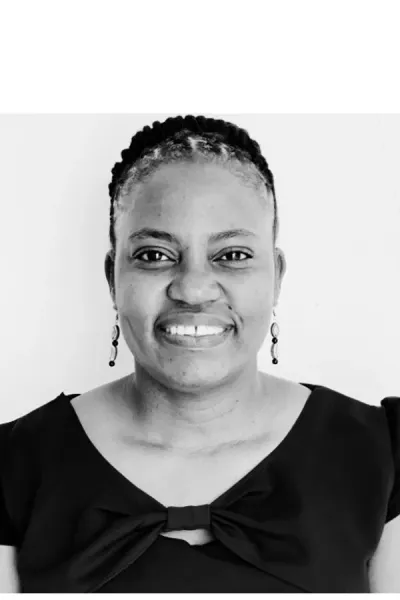
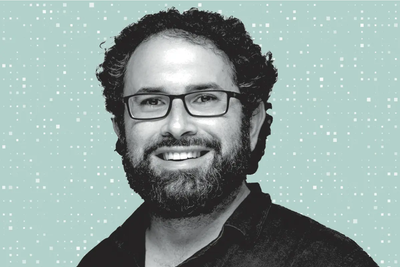
The eight African experts do not represent a single narrative or discipline. They embody the pluralism of a continent negotiating its technological future in real time.
Adji Bousso Dieng’s work in probabilistic machine learning speaks to the scientific core of AI , the mathematical architectures that allow machines to reason under uncertainty. Rita Orji approaches the same technology from the opposite direction, studying how algorithms influence behavior and how human centered design can make AI equitable for communities often excluded from innovation cycles.
South Africa’s Vukosi Marivate has spent years building natural language processing systems for African languages, challenging the assumption that meaningful AI must revolve around English dominant datasets. His work is not just technical, it is cultural, an effort to ensure that languages spoken by millions are not erased by algorithmic neglect.
Around them stand scholars like Joyce Nakatumba-Nabende, Tegawendé Bissyandé, Girmaw Abebe Tadesse, Mennatallah El-Assady, and Awa Bousso Dramé, researchers whose work spans data science, engineering, visual analytics, and policy. Their collective presence hints at something deeper than expertise, a worldview shaped by the intersection of innovation and inequality.
A Continental Confidence
Perhaps the most profound impact of this moment will not be felt in policy documents or UN reports, but in perception.
For young African researchers watching from Lagos, Addis Ababa, Dakar, or Cape Town, the message is clear: global AI leadership is no longer an external aspiration. It is a space where African expertise belongs.
That psychological shift may be as important as any technological breakthrough. It reframes Africa not as the last adopter of innovation but as a laboratory of ideas, a place where ethical debates, linguistic diversity, and community driven research reshape what artificial intelligence can become.