


What has been happening in Pretoria over the past two days feels less like a workshop and more like a continental reset. The Forecast4Africa gathering, hosted by AfriClimate AI, was designed with a clear purpose to build Africa’s largest community-driven climate intelligence ecosystem, one that uses AI not as a buzzword, but as a practical tool for the realities of African forecasting. From the opening sessions, speakers made it clear that the workshop wasn’t simply about adopting global technology, it was about shaping it.
In his keynote talk, Prof Willem Landman began by presenting his thoughts on how Africa's forecasting systems can no longer rely on models developed thousands of kilometres away, stressing that the continent requires models educated to reflect African realities.
A crucial element was provided by Elinor Kruse of Google DeepMind, who said that when AI models are co-developed with the people who depend on them the most, they become more accurate and valuable. Her statement was exactly in line with the goal of the workshop, which is to make sure African institutions are co-creators of cutting-edge forecasting systems rather than only users of them. On Day 2, breakout rooms were transformed into living laboratories, bringing this concept to life. Participants developed prototype AI solutions by working through real-world problems, such as grid stability and drought forecasts.
Dr. Asaminew Teshome from the Ethiopian Meteorological Institute highlighted how operational forecasting in Africa needs AI tools that complement, not replace, forecasters’ expertise, while South African researchers spoke about designing systems that respect existing workflows rather than overwhelm them. The discussions were less about tools and more about empowerment, how AI can give African forecasters sharper insights, faster alerts, and greater confidence in decision-making.
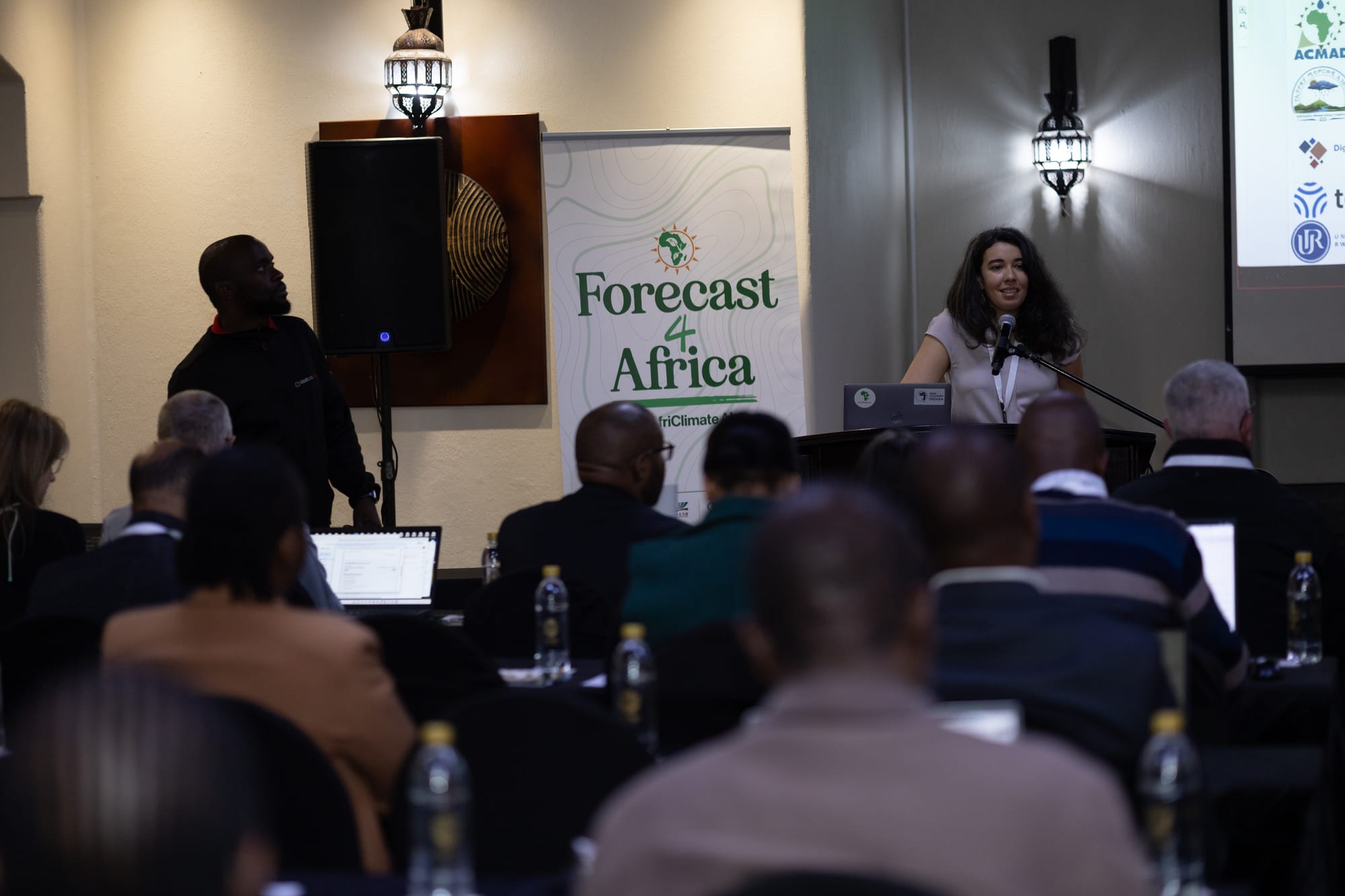
The policy roundtable completed the workshop's goal. UNU-INWEH and Presidential Climate Commission representatives emphasised that forecasting is a governance issue in addition to a scientific one. They pointed out that reliable data, open systems, and long-term institutional capability are essential components of Africa's adaptation strategy. Even the most sophisticated AI model would fall short without these at the precise moment when communities most need it. A quiet agreement developed as the day came to an end and people gathered around the evening barbecue.
Forecast4Africa is more than just an initiative, it represents the beginning of a new social compact between institutions, technology, and the people that climate forecasting is supposed to safeguard. The workshop is providing the continent with something far more significant than a new set of tools by uniting African meteorologists, AI researchers, politicians, and innovators under one roof: it is giving Africa control over its climate future.